
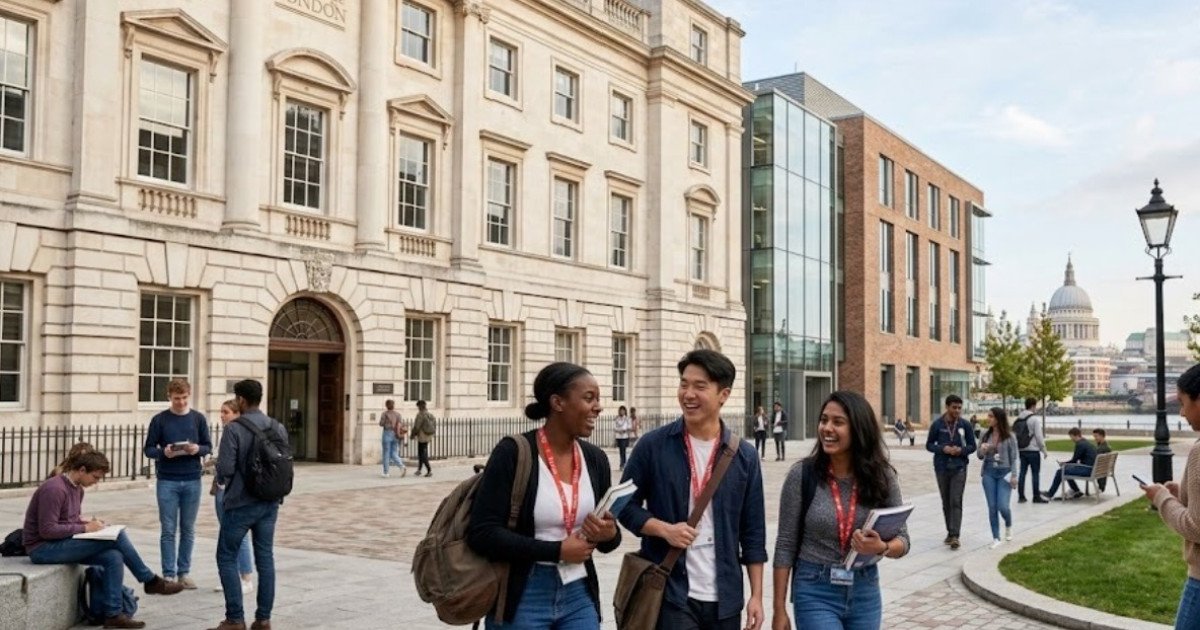
Working part-time is part of the plan for most international students, and getting the rules wrong is one of the few mistakes that can affect your visa rather than just your budget. Here is how it actually works.
The short answer
If you are studying a degree-level course at a higher education provider with a track record of compliance, the Student visa normally permits up to 20 hours of paid work per week during term time.
If you are studying below degree level, the usual limit is 10 hours per week during term time.
Outside term time — during official university vacations, and after your course has formally finished — full-time work is normally permitted.
But read the next section before you rely on any of that.
Your visa states your own conditions
The numbers above are the standard position. They are not automatically yours.
Your work conditions are stated on your own visa and in your grant letter, and they depend on your course level, your provider and your individual circumstances. Some students are granted no work rights at all.
Three habits that keep people out of trouble:
- Read your own visa conditions rather than assuming the general rule applies to you.
- Do not rely on what a friend was told. They may be on a different course level at a different type of provider.
- Check gov.uk when anything is unclear. It is the authoritative source, above this page or any other guide.
What counts as “term time”
This catches people out more than the hour limit does.
Term time means the periods your university defines as teaching and assessment time — and it usually includes periods when you have no timetabled classes but are still expected to be studying. A gap between lectures is not automatically a vacation.
For postgraduate students this matters especially. A taught master’s often has a dissertation period over the summer, and that period is normally still term time even though teaching has finished. Treating it as a vacation and working full-time is a common and serious error.
Your university publishes its official term dates. Those are the dates that count, not the ones that feel right.
How the 20 hours is measured
It is 20 hours in any single week, not an average across the month. You cannot work 10 hours one week and 30 the next.
The week is normally counted Monday to Sunday, though you should confirm how your own conditions define it. Two part-time jobs are added together — the limit applies to your total hours, not per employer.
Unpaid and voluntary work can also count towards the limit in some circumstances, so it is worth checking rather than assuming that only paid hours matter.
What you cannot do
Regardless of your hours, the Student visa normally excludes:
- Self-employment and freelancing, including most contractor arrangements
- Setting up or running a business
- Professional sportsperson roles, including as a sports coach in some cases
- Permanent full-time positions
- Work as an entertainer
The self-employment exclusion is the one that surprises people most often, because freelance and gig work is otherwise so normal. Being paid through an invoice rather than a payslip is a strong signal you should check carefully before starting.
PhD and doctoral students
Research students frequently ask whether the 20-hour rule applies to them in the same way, and the answer is that it generally does during term time — but doctoral study often has no conventional vacation structure, which makes “term time” harder to identify.
If you are a research student, confirm your position with your institution rather than reasoning from an undergraduate example.
Placements and work as part of your course
Work that is a formal, assessed part of your course is treated differently from a part-time job and does not count in the same way against your limit. There are rules about how much of your programme can be a placement.
If your course includes a placement year or a work-based module, that arrangement is set up by your university — it is not something you organise yourself under your normal work allowance.
What happens if you exceed the limit
This is not a minor administrative matter. Working more hours than your visa permits is a breach of your immigration conditions, and the possible consequences include curtailment of your visa, difficulties with future UK applications, and problems for your university as your sponsor.
Employers are required to check your right to work and your conditions. Assuming nobody is tracking it is a bad assumption.
Tax, National Insurance and practical setup
If you work in the UK you will normally need a National Insurance number, and you may pay income tax and National Insurance depending on your earnings.
Two practical points:
- You can usually begin working before your National Insurance number arrives, provided you can show your right to work. Apply for it early anyway.
- Many students overpay tax through emergency tax codes and never reclaim it. It is worth checking at the end of the tax year.
Do not build your budget on it
The most important thing about student work is what it should be used for.
Part-time earnings are a contribution to living costs. They are not a way to fund tuition, and universities do not accept expected earnings as evidence of funds for your visa application. A budget that only works if you find a job in your first month is a fragile budget.
Plan your finances as though you will not be working, and treat any earnings as easing the pressure rather than closing a gap. Our guide to affordable UK universities covers how to build a realistic total, and UK student visa requirements explains how the financial evidence is assessed.
Frequently Asked Questions
How many hours can an international student work in the UK?
Normally up to 20 hours per week during term time for degree-level courses, and 10 hours for courses below degree level. Full-time work is usually permitted during official vacations. Your own visa states your actual conditions.
Can I work full-time during the summer?
Usually yes, if the summer is an official vacation period for your course. Be careful as a master’s student — a dissertation period over the summer is normally still term time.
Is the 20-hour limit an average?
No. It applies to each individual week. You cannot work fewer hours one week to justify more the next.
Can I be self-employed or freelance on a student visa?
Normally no. Self-employment, freelancing and running a business are generally excluded regardless of hours.
Do two part-time jobs count separately?
No. Your total hours across all employers count towards the same limit.
Do I need a National Insurance number to work?
You will normally need one, though you can usually start work before it arrives if you can evidence your right to work. Apply early.
Can I work during my dissertation period?
Only within your term-time limit, because a dissertation period is normally still term time even without timetabled teaching. Check your university’s official term dates.
Will working part-time affect my visa?
Working within your conditions is fine and expected. Exceeding them is a breach with real consequences for your visa and for your sponsor.
Do international students pay tax in the UK?
If you work, you are taxed on the same basis as anyone else earning in the UK — there is no exemption simply for being an international student. Income Tax and National Insurance apply once your earnings pass the relevant thresholds, and most students are taxed through PAYE by their employer automatically.
Can international students get a tax refund in the UK?
It is possible to have overpaid, which happens most often to students working part-time or for only part of a tax year, because PAYE can assume a higher annual income than you actually earn. Refunds are claimed from HMRC directly, and you should never pay a third party a percentage to do something you can do yourself for free.
Do international students need a National Insurance number?
You need one to work, though you can usually start before it arrives if you can show your employer you have applied. It is free to apply, and any site charging you for one is not an official service.